
What Does a Building Inspector in Brisbane Look for During a Pre-Purchase Inspection?
You’ve found a place you love. The open home went well, the agent’s keen, and you’re already working out where the couch goes. But what’s going on behind the fresh paint and new carpet?
That’s where a building inspector comes in. If you’re buying in Queensland, a building inspector Brisbane buyers can rely on gives you an independent look at the property’s condition before you commit. With our humid summers, storm season and timber-heavy housing, there’s often more to find than you’d expect.
We get asked the same question all the time: what does the inspector actually look at? Here’s a plain-English walk-through of what gets checked, what doesn’t, and how to use your report before you sign.
What a Pre-Purchase Building Inspection Covers in Queensland
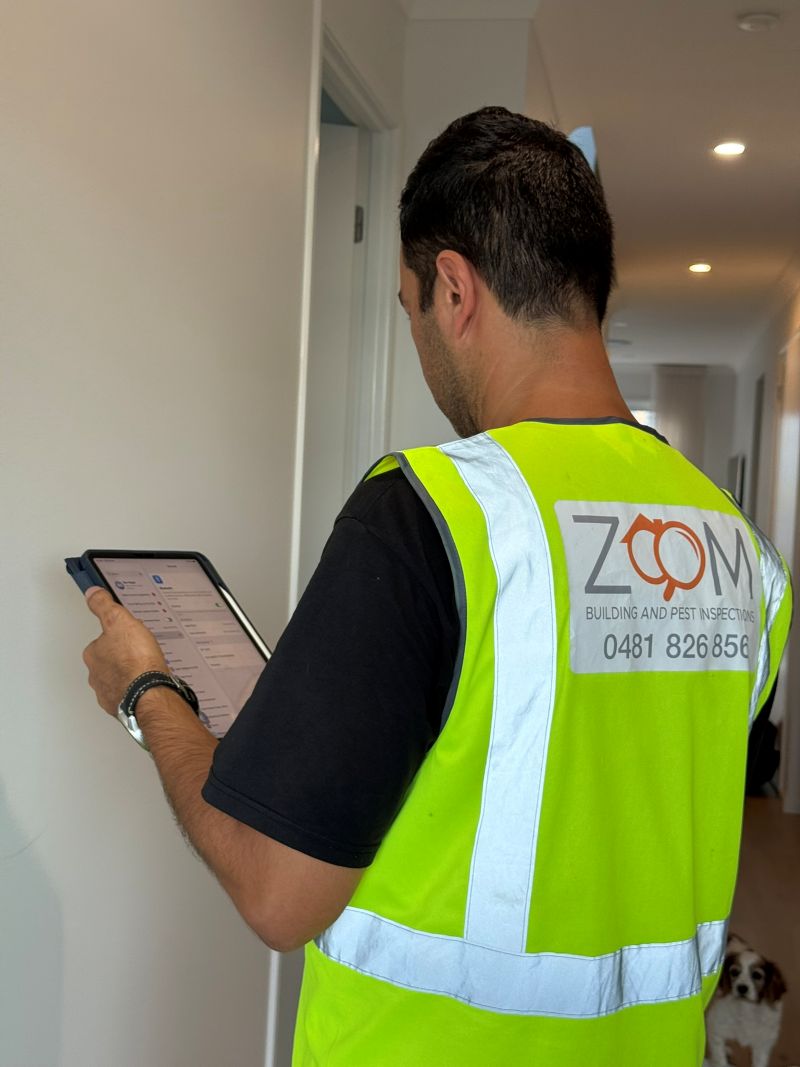
Pre-purchase building inspections are carried out to Australian Standard AS 4349.1. It sets the minimum scope, so you know exactly what you’re paying for. A licensed inspector checks every reasonably accessible part of:
- The interior of the building
- The exterior of the building
- The roof space
- The roof exterior
- The subfloor
- The site within 30 metres of the house, including fences, paths, driveways, sheds and retaining walls
The inspection is visual and non-invasive. That means no lifting carpet, cutting into walls or moving heavy furniture. If an area can’t be safely reached, the report will say so and explain why.
Structural Defects a Building Inspector in Brisbane Looks For
Structure comes first. These are the major defects that can cost serious money and, in some cases, make a property unsafe. Common examples we find around Brisbane:
- Cracking in brickwork, slabs and internal walls. Hairline cracks are usually cosmetic. Wide or stepped cracks can point to movement in reactive clay soils.
- Stumps and subfloor framing. Queenslanders and older high-set homes sit on timber or concrete stumps. We check for leaning, rot, rust in steel stirrups and signs of past re-stumping.
- Sagging floors or rooflines, which can mean undersized or failing framing.
- Retaining walls. Hilly suburbs like The Gap, Ashgrove and Paddington have plenty of them, and a leaning wall is an expensive fix.
Your report separates major defects from minor ones. So you can see at a glance what’s a deal-breaker and what’s just general maintenance.
Roofs, Gutters and Storm Damage
Brisbane’s summer storms are hard on roofs. During the inspection, we look at:
- Rusted sheets and loose screws on metal roofs
- Cracked, slipped or broken tiles and tired ridge capping
- Gutters, downpipes and flashings that overflow or leak
- Water stains, sagging timbers and missing insulation inside the roof space
Access matters here. Inspectors work from a ladder up to 3.6 metres and don’t use scaffolding. On a steep or high two-storey roof, parts may be viewed from the eaves or the ground. If any section can’t be seen, the report tells you, so you’re never left guessing.
Moisture, Mould and Drainage
Moisture is behind a lot of the problems we see in Brisbane homes. Humidity, heavy rain and poor drainage all play a part.
We use moisture meters and thermal imaging to check:
- Shower recesses and bathroom floors
- Laundries and kitchens
- Walls where garden beds sit above the damp course
- Poorly ventilated subfloors
We’ll also look at how water moves around the block. Low-lying properties, blocked stormwater, and water pooling against the house are all red flags. After the 2011 and 2022 floods, it’s also worth checking Brisbane City Council’s flood maps for any property you’re serious about.
Termites and Timber Pests
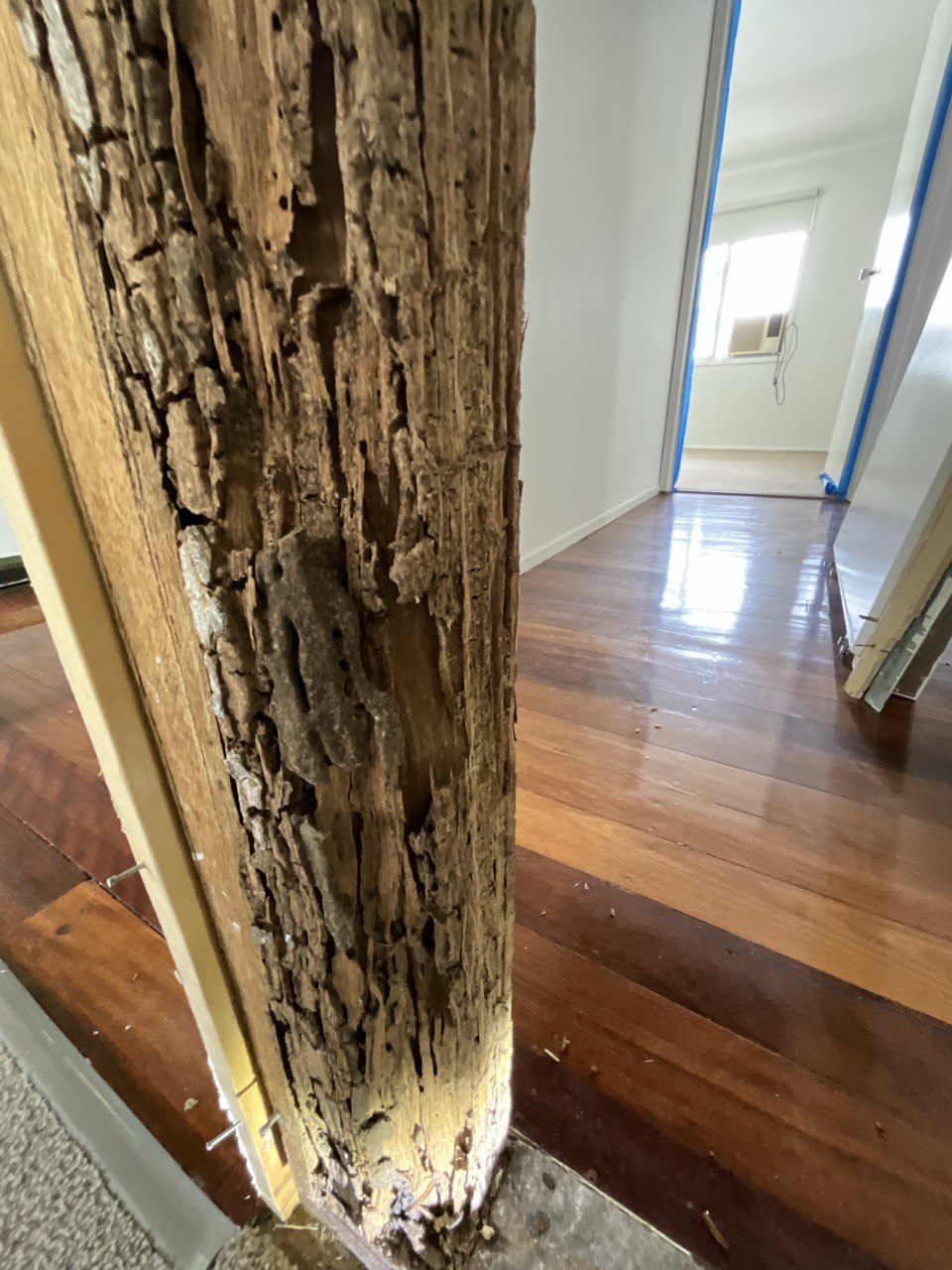
A building inspection notes visible timber damage. But termites need a timber pest inspection to AS 4349.3, which is why most Brisbane buyers book both together. Here’s more on why you need a building and pest inspection.
A combined inspection checks for live termites, past damage, and the conditions termites love, like timber touching soil, leaking taps,s and garden beds piled against walls. In our subtropical climate, this isn’t optional. Most home insurance policies don’t cover termite damage either, so finding it before you buy really matters.
What a Building Inspector Won’t Check
A pre-purchase inspection is broad, but it has limits. It generally doesn’t include:
- Electrical wiring or plumbing beyond what’s visible (you’ll need a licensed electrician or plumber)
- Pool safety compliance, which needs a separate pool safety certificate in Queensland
- Asbestos testing, although suspected material may be noted
- Council approvals for renovations or enclosed downstairs rooms
If any of these matter to you, ask your conveyancer or the right specialist before your building and pest condition expires.
How to Use Your Report Before You Buy
At Zoom BPI, you’ll get a detailed report within 24 hours, with photos, clear notes on major and minor defects, and practical recommendations.
From there, you can:
- Ask the seller to fix specific issues
- Get quotes from trades and negotiate the price after your building and pest inspection
- Walk away within your contract’s inspection condition
Buying at auction? There’s no cooling-off period, so book your inspection well before auction day. up incomplete work and defects while the builder is still responsible for fixing them.
Frequently Asked Questions
Book Your Pre-Purchase Inspection
A good building inspector looks well past the styling. They check the structure, roof, moisture, drainage, and the signs of termites, then tell you clearly what it all means for your purchase.
Zoom BPI’s licensed inspectors work across Brisbane, the Gold Coast and the Sunshine Coast. We’re fully independent, booking takes three easy steps, and your detailed report lands within 24 hours.
What Others Are Reading:

Our Services
Get A Free Quote
Contact us today for a free, no-obligation quote on your building and pest inspection.