
Dilapidation Report Brisbane
Construction is about to start next door, or on your own site. Before the first excavator arrives, you need a dated, independent record of the property’s condition. A dilapidation report documents every existing crack, stain and defect with timestamped photos, so when damage is claimed later, the facts are already on paper.
24hr
Report Turnaround
500+
Happy Clients
100%
Licensed & Insured
QBCC Licensed
24 Hour Reports
Thermal Imaging
MBA QLD Member
Fixed Pricing

Pre-Construction Dilapidation Surveys in Brisbane
A neighbour has lodged plans for a new build. A developer has started demolition down the street. Road works have been scheduled outside your front door. In every case, the question that comes later is the same: was that crack there before the works started, or not?
Zoom Building & Pest Inspections carries out dilapidation reports across Brisbane and North Brisbane, including Redcliffe, North Lakes, Caboolture, Griffin and Warner. [Confirm owner-operator name as used on the handover page] holds QBCC Licence 15279880, and every report is prepared independently of both the property owner and the party carrying out the works.
A dilapidation report, also called a dilapidation survey, pre-construction report or property condition report, is a detailed visual record of a building and its surrounds at a set point in time. It becomes the baseline that everyone refers back to if damage is alleged during or after construction.
If you are a homeowner with works starting next door, the report protects you. Without one, you may struggle to prove that new cracks, sticking doors or water damage were caused by the neighbouring works rather than already present.
If you are a builder or developer, the report protects you just as much. It stops pre-existing defects on adjoining properties from being blamed on your project, and it is often required by Brisbane City Council as a condition of development approval.
Dilapidation reports are also used at the start and end of commercial leases, before Queenslander house raising and restumping, and before major road, rail and drainage works.
The Final Report
Your dilapidation report is delivered in PDF format within 24 hours of the inspection. Every existing defect is photographed, described by type and location, and measured where relevant, then laid out room by room and elevation by elevation so findings can be cross-checked easily in future. Thermal images are included where they show existing moisture.
One Important Note Before You Book
A dilapidation report is only useful if it is completed before works begin. Once excavation, demolition or piling has started, it becomes much harder to prove which defects were already there.
We are often called after the first cracks have appeared, and by then the report can only record the current condition, not what it looked like before. If you know works are coming, book as early as you can and let us know the start date so we can schedule around it.
If access to a neighbouring property is needed, speak to the owner first. We can help coordinate access once consent is given.
Ready to Book Your Inspection?
Protect your property with a professional building and pest inspection. Contact us today to get started.
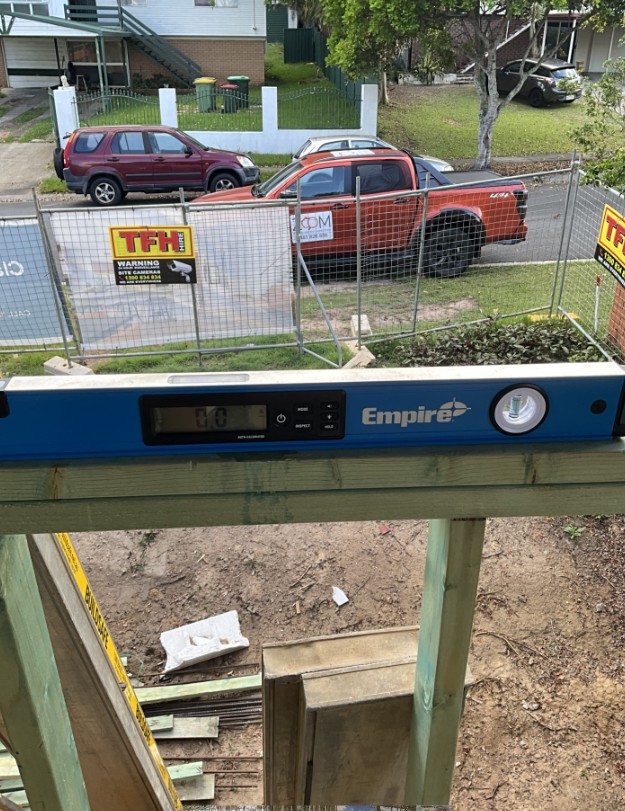
What is a Dilapidation Report Cover?
As an independent inspector, we carry out a thorough visual inspection of all accessible areas of the property and its surrounds, inside and out. The aim is simple: record the condition of everything that could be affected by nearby works, in enough detail that it can be compared later without argument.
We pay particular attention to the elements most likely to move or crack from vibration, excavation and ground settlement, and we record existing defects even when they look minor. A hairline crack today can become the centre of a claim six months from now.
Items we document in every Brisbane dilapidation report include:
- Cracking in external brickwork, render and cladding
- Cracking in internal plaster walls, ceilings and cornices
- Floor tiles, grout lines and existing tile cracking
- Doors and windows that stick, bind or sit out of square
- Water staining, damp patches and existing moisture
- Wet areas, including shower and bathroom tiling
- Driveways, paths, slabs, patios and pool surrounds
- Retaining walls, boundary fences and garden walls
- Roof covering, gutters and downpipes, where safely accessible
- Subfloor areas and stumps, where accessible
- Adjoining council assets such as footpaths, kerbs and road surface, where required
- Crack widths, measured and recorded
Each item is photographed with a timestamp and noted by location, so a future inspection can be matched against it point by point.
What We Can and Can’t See
Please note: a dilapidation report is a visual, non-invasive inspection. We do not cut into walls, lift floor coverings or move furniture and stored goods, and we can only record areas that are safely accessible on the day.
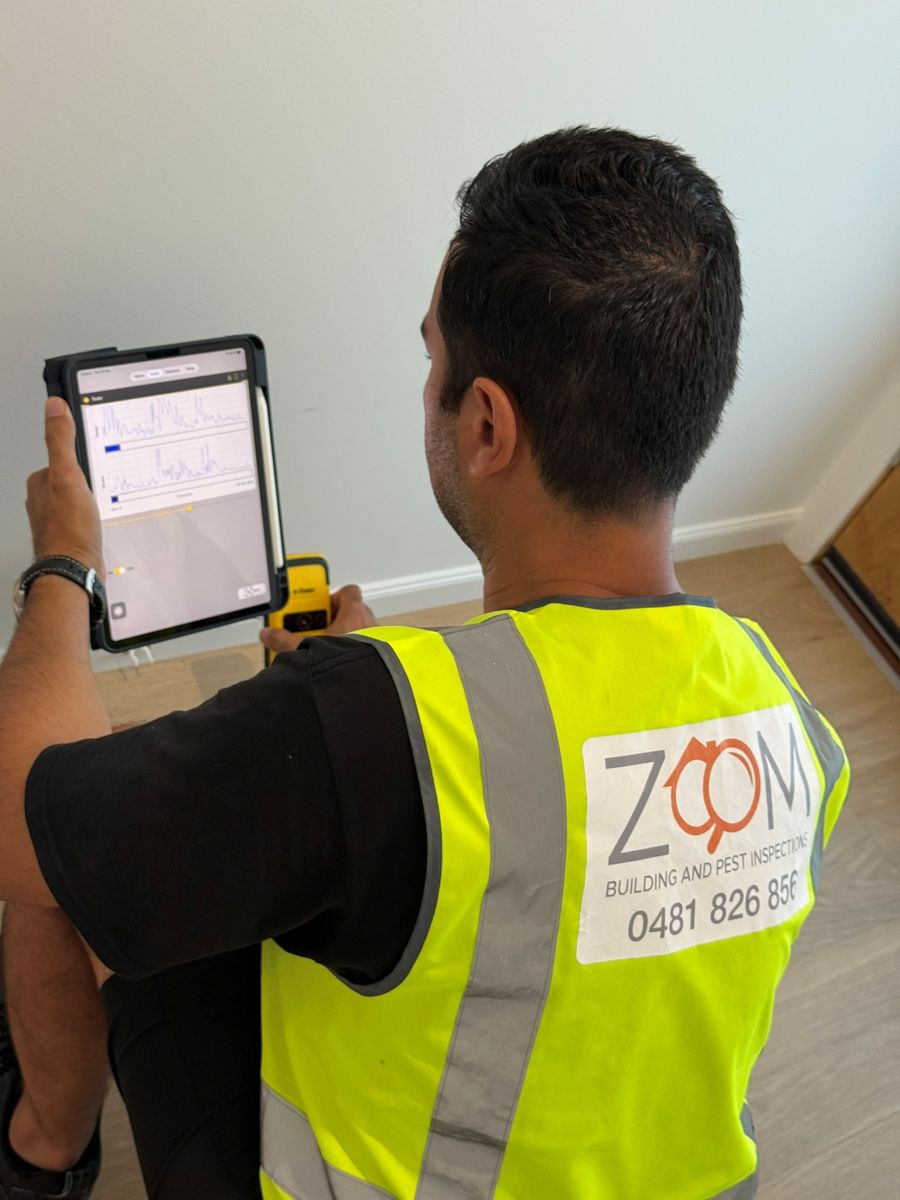
We do include FLIR thermal imaging as standard, which helps identify existing moisture behind wall surfaces that the eye cannot see. If a water damage claim arises after works start, this can show whether that moisture was already present.




The Legal Reality of Construction Damage
When damage is claimed after nearby works, the person making the claim generally needs to show that the works caused it. Without a record of the property’s condition beforehand, that becomes a matter of one party’s word against the other’s.
For homeowners, this often means a genuine claim is disputed because there is no proof the crack was new. For builders and developers, it means paying for repairs to defects that were there long before the project started.
A dilapidation report removes the guesswork. It is dated, photographed and prepared by an independent, QBCC-licensed inspector, which gives it real weight with builders, insurers, councils and, if it comes to it, lawyers and tribunals.
What to Do With the Report
Your report should be shared with the relevant parties before works begin, so everyone agrees on the starting point.
- Homeowners: send a copy to the builder or developer before works start, and keep the original safe. If new damage appears, raise it in writing straight away.
- Builders and developers: provide copies to adjoining owners and to council where required, and keep them on file for the life of the project.
- Landlords and tenants: attach the report to the lease so make good obligations are clear when the lease ends.
Our 3-Step Dilapidation Report Process
Book Your Inspection
Call us or fill in the online form with the property address and your works start date. We confirm your booking and help coordinate access with the owner, neighbour or builder.
We Inspect the Property
Your inspector records every accessible area inside and out, with timestamped photos, crack measurements and thermal imaging.
Receive Your Detailed Report
Your dated dilapidation report arrives in your inbox within 24 hours, ready to share with builders, neighbours, council or your insurer.
Contact Us
Get In Touch
Contact our team today to arrange a professional building and pest inspection for your property.
Need Help?
Dilapidation Report FAQ’s
Got a question?
Find answers to common questions about our building inspection services.