Building Inspection Vs Timber Pest Inspection In Brisbane — Do You Need Both?
You’re about to spend several hundred thousand dollars on a Brisbane property. The contract says you should book a building inspection. Your conveyancer is talking about a separate pest inspection. The inspector you’re calling offers them as a combined package for less than two separate inspections. So what do you actually need, and what does each one really check? Here’s the straight answer, no padding.
The Short Answer
For almost every Brisbane property purchase, you need both. The building inspection checks the bones of the property. The timber pest inspection checks for termites and timber decay. Different inspectors look at different things, and most buyers book them together as a combined inspection because it’s cheaper, faster, and covers both risks in one report. The exceptions are narrow, modern brick homes under 5 years old in low-termite-risk pockets, and even then, most buyers still get both because the cost difference is small relative to the risk.
What A Building Inspection Actually Checks
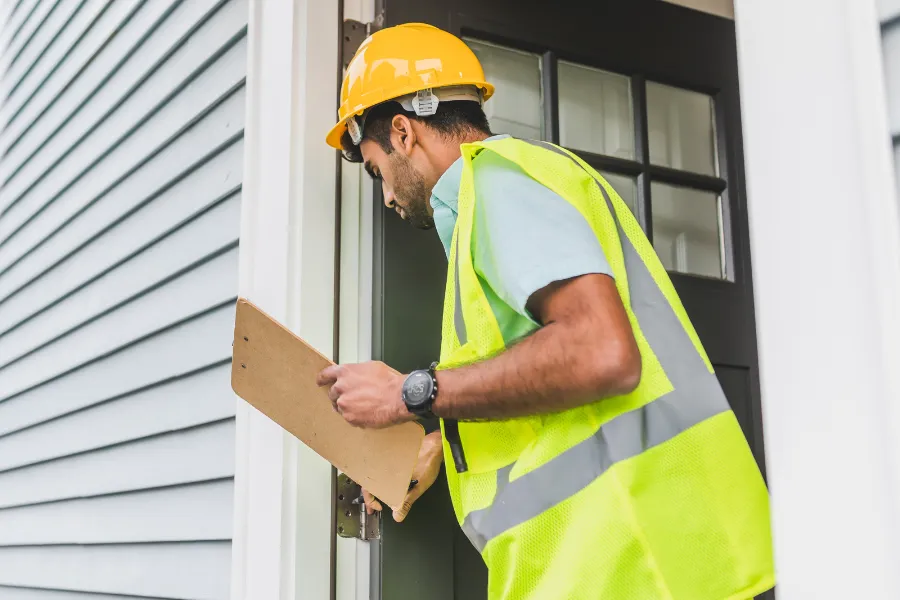
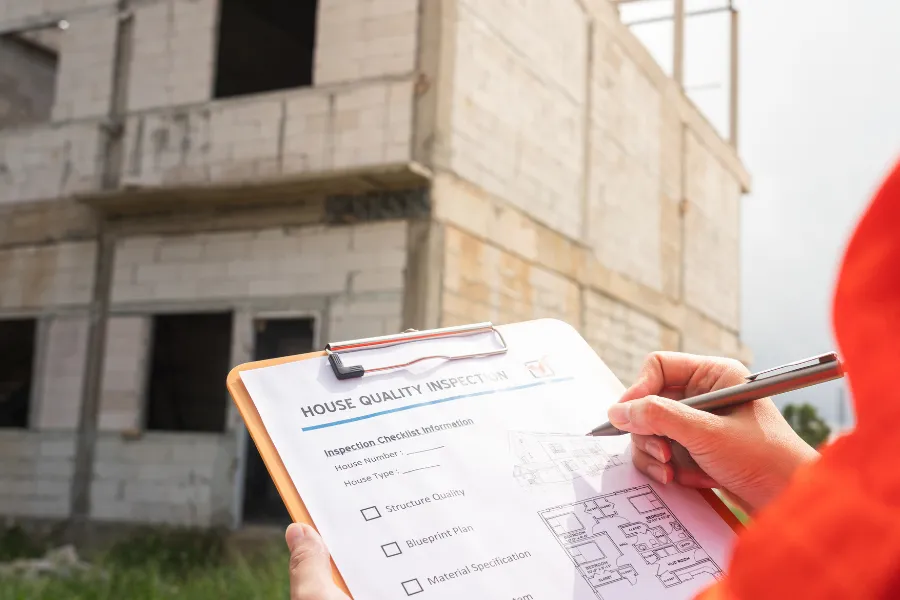
A building inspection evaluates the structural and construction condition of the property. The inspector walks through every accessible area and assesses:
- Roof structure and roof covering: Sagging, broken tiles or sheets, flashing failures, gutter and downpipe condition, evidence of leaks.
- Roof cavity: Insulation, framing condition, evidence of water ingress, electrical safety, ventilation.
- Walls and ceilings: Cracking, plaster damage, signs of structural movement, dampness.
- Floors: Levelness, soft spots, sagging, evidence of subfloor issues.
- Subfloor (where accessible): Bearer and joist condition, ventilation, drainage, moisture levels.
- Wet areas: Bathrooms, kitchens, laundries, sealing, drainage, evidence of leaks.
- External envelope: Render and cladding condition, paintwork, balcony and deck construction.
- Site drainage: Slope away from the house, downpipe discharge, evidence of pooling.
The inspector reports defects, safety hazards, and items needing maintenance or repair. They cannot give you a value, predict future failures, or guarantee what’s behind walls, only what’s visible at the time of inspection. Read the report carefully for the difference between “minor maintenance” and “structural concern”, those two phrases mean very different things to your budget.
What A Timber Pest Inspection Actually Checks
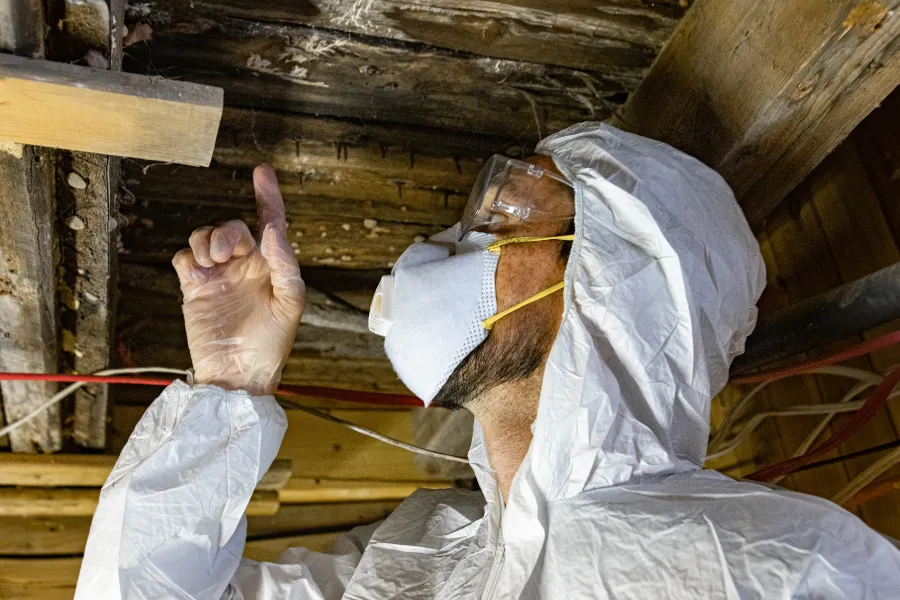
A timber pest inspection is a different scope entirely, it’s about pests and timber decay, not structure. The inspector specifically looks for:
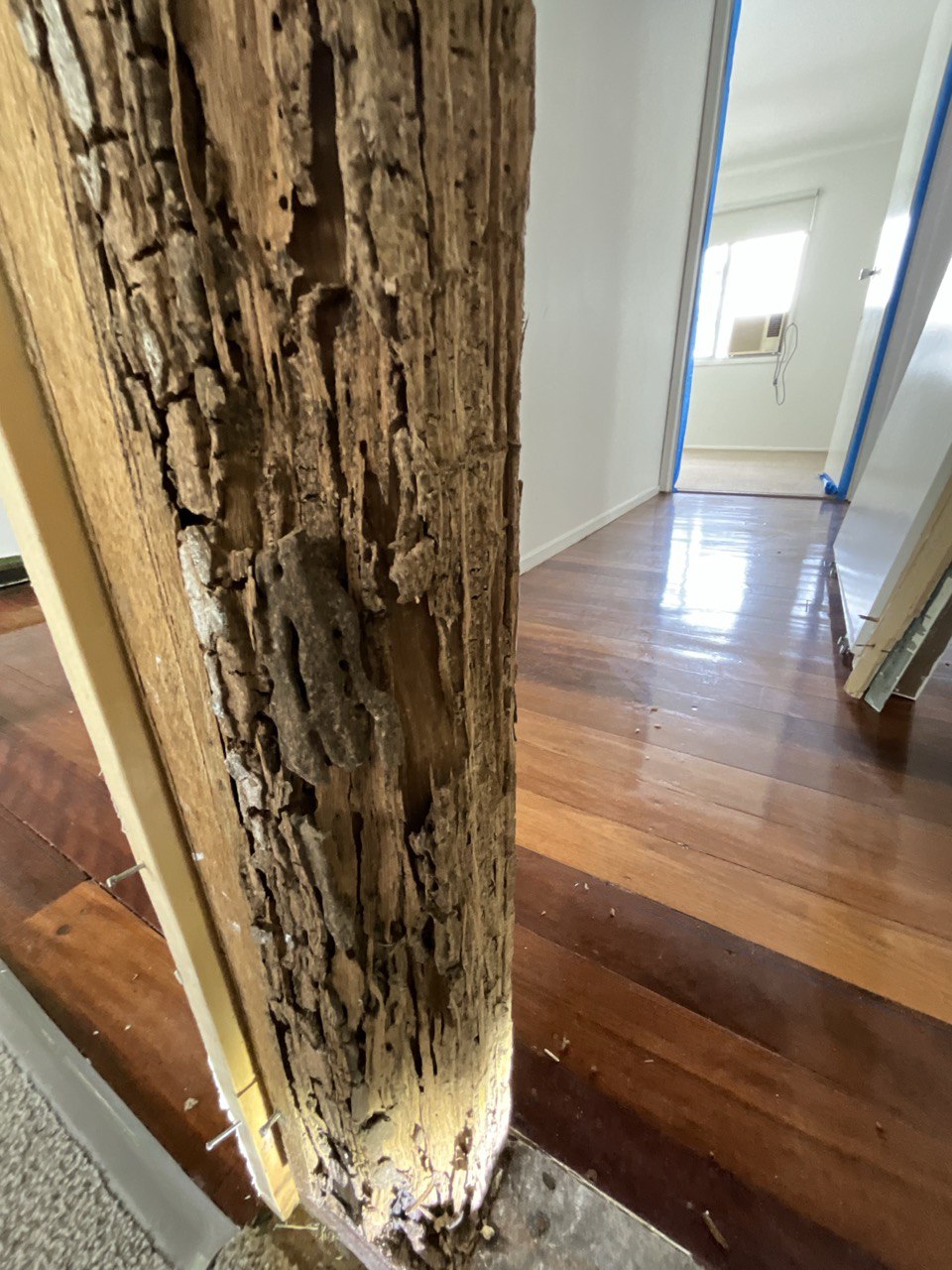
- Active termite activity: Live termites, mud tubes, galleries inside timber, fresh damage patterns.
- Past termite damage: Old galleries, structurally compromised timber that’s been eaten through.
- Conditions that attract termites: Moisture sources, timber-to-soil contact, garden mulch against weatherboards, leaking taps near foundations.
- Wood-borer activity: Powder post beetle, common furniture beetle, common in older Brisbane homes with hardwood floors.
- Decay fungi and rot: Particularly in subfloor timbers, decking, weatherboards in shaded areas.
- Pre-construction barriers: Whether the property had termite protection installed at build and whether it’s still effective.
The inspector uses thermal imaging, moisture meters, and sometimes a boroscope to find activity that isn’t visible to the eye. A good pest inspection report tells you whether you’re dealing with active infestation, past damage that’s been treated, or no current risk, and what treatment or prevention is recommended.
Why Brisbane Properties Need Both More Than Most
Brisbane is one of Australia’s highest termite-pressure cities. The subtropical climate, warm year-round, humid summers, mild winters, is ideal for termite colonies. Subterranean termites are active across virtually every Brisbane postcode. CSIRO data and Queensland building industry surveys consistently put termite incidence in southeast Queensland at roughly 1 in 3 homes affected within their lifetime. That’s not a fringe risk, it’s a primary one.
Skipping the timber pest inspection on a Brisbane purchase to save $100 against the cost of a combined inspection is the kind of false economy that can land you with a $25,000+ termite damage repair bill three years after settlement.
When You Can Get Away With Just One
- Building-only might be enough if: the property is a brand new build (under 12 months old) with valid termite protection certification, all materials are non-timber (full brick or steel frame with no internal timber), and you’ve verified the builder’s pest barrier installation.
- Pest-only might be enough if: you already have an extremely recent building inspection (within the last 60 days) on the same property and only need the pest scope updated. Rare situation.
- Both are essential if: the property is more than 5 years old, has any timber framing, has decking or pergolas, has a subfloor, or is in any inner-city Brisbane suburb with high tree coverage.
In practice, more than 95% of Brisbane buyers book combined building and pest inspections. The exceptions are rare enough that if you’re not sure, get both.
The Cost Difference, Why Combined Is Cheaper
Booking the inspections separately means two site visits, two report writeups, and two callout fees. Combined, one inspector visits once and produces one consolidated report, saving you both time and money.
- Building-only inspection: From $390 for a small unit, scaling to $500+ for larger homes.
- Timber pest only inspection: From $300 for a standard residential property.
- Combined building and pest: From $440 for a 3-bedroom home. Saves $200+ compared to booking separately.
Full pricing for combined inspections across property sizes is on our prices page. Zoom BPI uses fixed pricing, no estimates that creep upward once the work starts.
What To Look For When Booking
- QBCC licence: Required by Queensland law for building inspections. Verify on the QBCC public register before booking.
- Insurance: Professional indemnity cover is non-negotiable. Ask for a certificate of currency.
- Sample reports: Every legitimate inspector will send one. If the sample is short, vague, or photo-free, that’s what your report will look like.
- Combined service in one visit: The inspector should hold both qualifications and deliver one consolidated report.
- Turnaround time: 24-hour reports are standard now. Anything slower eats into your contract clause window.
- Thermal imaging included: Modern combined inspections include thermal imaging as part of the fixed price, not as an upgrade.
Frequently Asked Questions
Can One Inspector Do Both A Building And Pest Inspection?
Yes, a qualified combined building and pest inspector holds both a QBCC building licence and a pest inspection qualification. They can perform both scopes in one site visit and deliver one consolidated report. This is how the vast majority of Brisbane combined inspections are done, including all Zoom BPI bookings.
How Long Does A Combined Building And Pest Inspection Take?
On site, between 90 minutes and three hours depending on property size and access. Smaller units sit at the lower end, four-bedroom family homes at the upper end. Acreage properties or houses with substantial outbuildings can run longer. The report is delivered within 24 hours.
Will The Inspection Find Termites If They’re Inside Walls?
Modern combined inspections use thermal imaging cameras to detect temperature anomalies behind walls, termite activity changes the thermal signature of the wall surface. Moisture meters and boroscopes are also used. No inspection can guarantee 100% detection if termites are deep inside structural framing with no surface signs, but a properly equipped inspector catches the vast majority of active infestations.
Do I Need A Pest Inspection If The Property Has A Termite Barrier?
Yes. Termite barriers reduce risk significantly but don’t eliminate it, they fail when disturbed by garden landscaping, plumbing repairs, or simply over time. A pest inspection confirms whether the barrier is still effective, whether there’s been any breach, and whether termites have found a way around it. Many Brisbane termite cases involve homes that had a barrier at construction.
What Happens If The Inspection Finds Major Problems?
You have options, withdraw from the contract during the inspection clause period, negotiate the price down, request the vendor repair the issues before settlement, or proceed with eyes open. The standard Queensland REIQ contract includes a building and pest condition giving you 5 to 7 business days to consider the inspection findings before commitment.
How Much Does A Combined Building And Pest Inspection Actually Cost?
At Zoom BPI, combined inspections start at $350 for a one-bedroom apartment and scale to $500+ for a five-bedroom home. Standard 3-bedroom home: from $440. Booking the same property as separate building and pest inspections typically costs $700+, combined is significantly cheaper because the inspector only does one site visit.
Does Zoom BPI Cover Gold Coast And Sunshine Coast?
Yes, Zoom BPI services Brisbane, Gold Coast and Sunshine Coast at the same fixed pricing. No travel surcharges between regions. Combined building and pest inspections available across all three areas with 24-hour report turnaround.
Book A Combined Inspection For Your Property
Most Brisbane buyers need both inspections. Booking them together saves time and money compared to two separate bookings. Call Ben on 0481 826 856 for a fixed price on your property, or request a free quote online. Reports back within 24 hours. Brisbane, Gold Coast and Sunshine Coast.
What Others Are Reading:

Our Services
Get A Free Quote
Contact us today for a free, no-obligation quote on your building and pest inspection.